
How to answer “What do you do?” as a writer
A writer who grew up moving around India finds "What do you do?" hard to answer. A reflection on work, identity and small talk.
From the archive. First published February 2021.
My father was a Major in the Indian Army. Under the rules, you retire either when you turn 60 or when your service reaches 30 years.
For Dad, it was the latter.
He surrendered his life to the Indian Army, and the Army made most of his professional choices on his behalf.
At countless gatherings, if anyone asked what he did, he would say “I am in the Army” and give his current rank. It was simple.
He was never pushed to explain why he picked it as a career, or whether he was satisfied with a life that moved him to a new place every two years, or where he saw himself in the next five years.
Instead, the most common question he faced was, “Where are you from?”
As the world became more modern, though, people showed a stronger interest in what we did than in where we were from, or anything else for that matter.
As a writer who grew up moving around a country as diverse as India, I can’t answer either question with a straight face.
- Where am I from?
- What do I do?
Do I dodge the question by explaining where my dad was born, a small north Indian village on the bank of the Ganges?
Do I say I sit alone in a room and wait for these words to take over me?
On most days I can manage the first question, but the second one feels more like a choice. I wasn’t born into writing.
I was sober, and in full possession of my senses, when I picked writing as my way of making money.
When I say I am a writer, more enquiries follow. What qualifications do I have? Am I a published writer? Is there any work of mine they might have heard of? Do I have a blog?
Depending on how I answer, I might be given praise or blame for my series of choices.
Without an answer, though, I might be considered a dysfunctional part of this economy.
It follows a simple narrative. If we do not have a satisfying enough answer to ‘what we do’, we may not get respect from strangers in social settings.
In short, we are what our LinkedIn profiles say.
As a writer, it’s my own achievement if I succeed and my own defeat if I end up in some form of misfortune. No other factors are considered, like a difficult childhood, or the running incompetence in the family, or plain bad luck.
In an ideal world, people would skip the specifics on our business card and ask about our day, or even ask our opinion on love.
But if someone asks us what we do, as writers we should always try to smile and say, “I don’t know. I’m trying to figure things out.”
Get the Sunday essay by email
One long post every Sunday and a Friday round-up of the week. Free. Unsubscribe with one click.
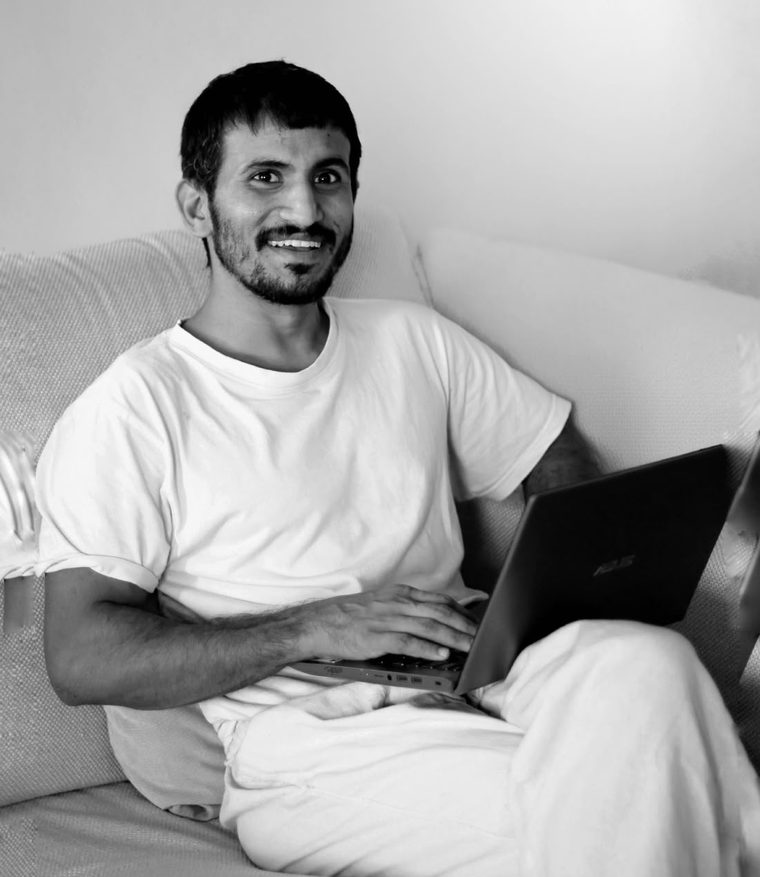
Deepak Parihar
I am a yogi and I live in Kerala. I look for answers to modern problems in Hindu scriptures, and I write about getting things done without losing yourself in the process.